


Printed materials continue to play an important role in how businesses communicate with customers. From business cards and brochures to product labels, packaging and exhibition displays, printed products help present information, support marketing activities and create a consistent brand identity.
However, choosing a printing company is not simply a matter of finding the lowest price. The quality of the finished product, the materials used, production options, finishing details and delivery arrangements can all affect the result. A print order that looks inexpensive at first may not provide the right value if the material is unsuitable, the colours are inconsistent or the finished product does not meet your requirements.
Whether you are preparing marketing materials, launching a new product or updating your company’s printed identity, it is worth taking time to compare your options.
This guide explains how to choose a printing service that matches your business needs, budget and expectations. It also covers the questions to ask before ordering, how to prepare artwork and what to consider when planning different types of printed products.
Professional business cards printed for business branding.
1. Start by Understanding Your Business Printing Needs
Before contacting a printing company, identify exactly what you need to produce. Different printed products have different purposes, sizes, materials and production requirements. A clear brief helps a printer recommend suitable options and makes it easier to compare quotations.
For example, a business preparing for a networking event may need professional business cards. A company introducing a new product might require product labels, custom packaging and promotional brochures. A business attending an exhibition may need banners, signs, display systems or printed catalogues.
Start by considering these questions:
- What type of printed product do you need?
- How many copies or units are required?
- What size, shape and format will work best?
- Who will use or receive the printed material?
- Where will it be displayed, distributed or stored?
- Do you need a standard product or a customised solution?
- When must the completed order be ready?
It is also helpful to define the main purpose of the project. A brochure intended to explain complex services may need more space for information, while a promotional flyer should communicate its main message quickly. Packaging may need to protect a product during transportation as well as present it attractively.
Think about your brand identity, too. Colours, typography, images and layout should work together across different printed materials. When business cards, brochures and packaging have a consistent appearance, customers can recognise the brand more easily.
A clear project brief reduces confusion, helps avoid unnecessary options and gives the printing company a better understanding of what you expect.
2. Evaluate Print Quality Before Placing an Order
Print quality is one of the most important factors when choosing a printing service. A strong design can lose its impact if the finished product has unclear text, inaccurate colours, poor image reproduction or inconsistent production.
If possible, review samples or examples of previous work before making a decision. Look at products that are similar to the items you intend to order. A company’s ability to produce a particular type of brochure, label or display material is more relevant than a general promotional image.
Pay attention to these details:
Colour accuracy: Colours should represent the approved design as closely as the printing process allows. This is especially important when printed materials need to match an established brand identity.
Text readability: Small text, contact information, product instructions and other important details should remain clear. Text that is too small or poorly reproduced can make a printed product difficult to use.
Image sharpness: Photographs, illustrations and logos should look clean. Low-resolution images may appear blurred or pixelated when printed at a larger size.
Consistency: When you order several copies, the products should have a consistent appearance. Differences in colour, trimming or finishing can affect the overall impression.
Material and finish: The printed surface should suit the product’s purpose. A premium presentation folder may need a different appearance and feel from a simple information leaflet.
For example, a brochure used during a client meeting should be easy to read and professionally finished. A business card should have clear contact details and a material that feels appropriate for the brand.
Ask the printer to explain how the proposed production method and material will affect the final result. A reliable provider should be able to discuss the options without making the process unnecessarily complicated.
Professionally printed folded brochures for business marketing.
3. Choose Materials That Suit the Product
The material used for a printed product affects its appearance, durability, handling and practical use. Choosing the right paper or other substrate is therefore an important part of planning a print project.
For business cards, paper thickness and surface treatment influence how the card feels when someone holds it. For brochures and flyers, paper weight affects flexibility, folding and distribution. For packaging, the material may need to protect the product during storage and transportation.
Consider the following points before selecting materials.
Paper weight and thickness
Thicker paper can give business cards, presentation folders and other corporate materials a more substantial feel. Lighter paper may be suitable for leaflets or flyers that will be distributed in larger quantities. The right choice depends on how the product will be used and the impression you want to create.
Surface finish
A matte finish can create a subtle, understated appearance, while a glossy surface may make colours and photographs look more vibrant. Neither option is automatically better. Consider the design, the product’s purpose and how customers will interact with it.
Durability
Materials that are handled frequently may need additional strength or surface protection. Products used outdoors or in demanding environments may have requirements that differ from ordinary indoor marketing materials.
Product compatibility
A material that works well for a brochure may not be appropriate for a product label or packaging. The intended surface, shape, storage conditions and application method all matter.
Sustainability considerations
If environmental impact is part of your company’s purchasing policy, ask about available material options and their suitability for the project. Make sure any environmental claims are supported by accurate product information rather than assumptions.
If you are uncertain about paper weight, surface treatment or other material choices, discuss them with the printing provider before approving the order. A suitable material should support both the appearance and practical requirements of the finished product.
4. Compare Printing Methods and Production Options
Different printing methods are designed to meet different production needs. The right choice depends on the product, quantity, artwork, material, turnaround time and budget.
Digital printing is often suitable for short and medium print runs. It can be a practical option when a business needs flexibility, smaller quantities or printed materials within a relatively short production schedule. Common applications include business cards, flyers, brochures and other marketing materials.
Offset printing may be worth considering for larger quantities, particularly when consistent production across a high volume is important. The most appropriate choice still depends on the project specifications and the printer’s production capabilities.
When comparing printing methods, do not focus on the method’s name alone. Ask how it affects the specific product you want to order. A method that works well for one type of material may not be the best option for another.
Useful questions include:
- Which printing method is suitable for this product?
- Does the quantity affect the recommended method?
- How will the method affect colour and image reproduction?
- Are there material or size limitations?
- What is the expected production time?
- Are there alternatives that provide better value for this order?
A good printing provider should explain the practical differences in clear language. This allows you to make an informed decision rather than choosing a production option based only on technical terms.
For a broader overview of available business printing options, explore Tulip Reklam’s printing services.
5. Review Finishing Options Carefully
Printing is only one part of the production process. Finishing can influence how a product looks, feels and performs after it has been printed.
Depending on the product, finishing options may include folding, cutting, trimming, lamination, binding or other surface treatments. Not every product needs additional finishing, so it is important to choose options that serve a clear purpose.
For brochures, folding can organise information into separate panels and make the material easier to read. For books and catalogues, binding helps keep pages together and supports convenient handling. For business cards, an appropriate surface treatment can complement the design and protect the printed surface.
Before approving finishing options, consider:
- Will the product be handled frequently?
- Does it need extra surface protection?
- Will folding or binding improve its usability?
- Does the finish suit the brand’s visual identity?
- Will the additional process affect the budget or delivery time?
Finishing should support the product rather than add unnecessary complexity. A simple leaflet may not need the same treatment as a presentation folder or product catalogue.
Discuss the available options with the printer and ask how each one affects the finished item. If the project is important, reviewing a sample or proof can help you understand the result before the full order is produced.
Professionally printed books and catalogues for business communication.
6. Consider Packaging, Product Labels and Large-Format Printing
Many businesses need more than traditional paper-based marketing materials. Depending on the products they sell and the way they promote their services, they may also require custom packaging, product labels, signs, banners or exhibition displays.
These items should be planned with the same attention to detail as business cards and brochures.
Custom printed packaging
Packaging protects a product and contributes to the customer’s experience. Its size, structure, material and printed design should all suit the product inside.
Before ordering packaging, consider the product’s dimensions, weight, storage conditions and transportation requirements. The packaging should provide suitable protection while making the product easy to identify and present.
The design should also support the brand. Consistent colours, clear product information and a suitable layout can help create a recognisable presentation across different products.
A packaging solution should balance practical needs with appearance. A visually attractive package is not useful if it cannot protect the product or is difficult to handle.
Product labels and stickers
Product labels can communicate product names, branding, instructions and other relevant information. Their size, material, shape and surface should suit the product they will be applied to.
For example, a label used on a container may have different requirements from one used on a paper box. The application surface and handling conditions should be considered before production.
Check that the label design includes all necessary information and that the text remains readable at the finished size. It is also worth confirming that the selected material is suitable for the intended application.
Signs and exhibition materials
Businesses that participate in trade shows, exhibitions or promotional events may need banners, display systems, signs, printed walls or other large-format materials.
These products should be suitable for the available space and visible from the expected viewing distance. Their design should communicate the main message quickly and remain consistent with the company’s branding.
When planning exhibition materials, consider how the products will be transported, assembled, displayed and stored after the event.
Explore Tulip Reklam’s printing and packaging services for more information about its business printing solutions.

Custom printed packaging for product presentation and business branding.
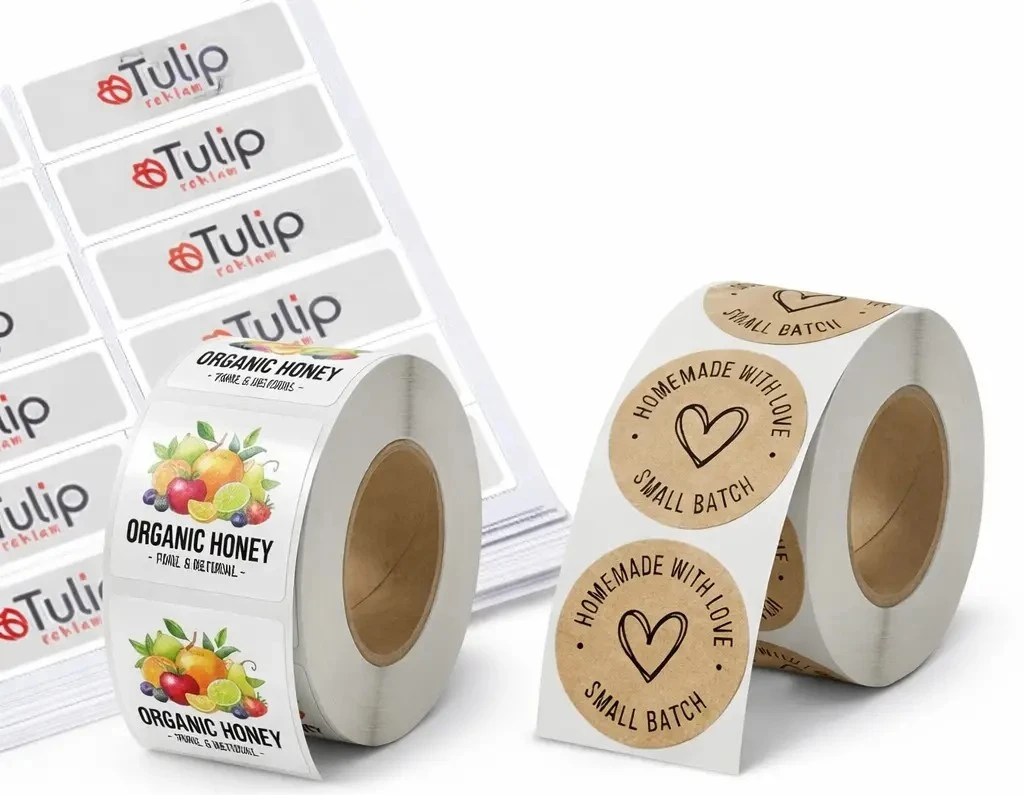
Printed product labels and stickers for business use.
7. Review Previous Projects and Relevant Experience
A printing company’s previous work can help you understand its capabilities. Before placing an order, look for examples that are similar to your planned project.
A provider may have experience with brochures and business cards but limited experience with packaging or large-format display materials. Reviewing relevant examples helps you assess whether the company can handle the type of work you need.
Consider these points when reviewing a portfolio:
- Are there examples of the product you want to order?
- Do the finished items look consistent and professional?
- Are materials and finishing presented clearly?
- Does the work show attention to layout and detail?
- Are customised projects included?
- Does the provider appear capable of handling your required quantity?
A portfolio is not a guarantee of the result you will receive, but it gives you useful information to discuss with the printing company.
You can explore Tulip Reklam’s previous projects to see examples of its work involving printing, packaging and visual communication.
8. Compare Quotes and Understand the Full Cost
Price is an important part of choosing a printing service, but the cheapest quotation does not always offer the best overall value.
Two quotes may appear similar while including different materials, quantities, finishing options or delivery arrangements. If you compare only the final amount, you may overlook important differences.
To make a fair comparison, provide each printing company with the same project information. Include the product type, dimensions, quantity, material preferences, finishing requirements and delivery expectations.
Check whether the quotation includes:
- Printing and production.
- Paper or other selected materials.
- Cutting, folding, binding or other finishing.
- Packaging and delivery.
- Artwork preparation or setup costs, where applicable.
- Any additional charges that may apply to the order.
If something is unclear, ask for an itemised explanation. It is better to understand the full cost before approving the project than to discover additional charges later.
Also consider the cost of mistakes or reprints. A low initial price may not provide good value if the finished product does not meet the agreed specifications.
The aim is to find a solution that balances quality, reliability and budget. A suitable printing service should make the cost understandable and help you choose options that match the actual needs of your project.
9. Confirm Production and Delivery Times
Delivery schedules can be particularly important when printed materials are needed for a product launch, marketing campaign, exhibition or business event.
Before confirming an order, ask how long production is expected to take and when the completed products can be delivered or collected.
Remember that the full process may include several stages:
- Reviewing the project requirements.
- Checking artwork and technical specifications.
- Making design adjustments, if required.
- Approving the final proof.
- Printing and production.
- Finishing and quality checks.
- Packaging and delivery.
Each stage may affect the overall timeline. Sending incomplete files or delaying proof approval can also create production delays.
To make planning easier, prepare your artwork early, confirm the required delivery date and allow extra time for important projects. If the order is connected to a fixed event, communicate that deadline clearly before production begins.
Do not assume that every product has the same turnaround time. A simple print order and a customised packaging project may require different production schedules.
10. Assess Communication and Customer Support
Good communication makes a printing project easier to manage. You should be able to explain your requirements, understand the available options and receive clear information about the order.
Before choosing a provider, consider how it responds to your questions. Does it understand the project? Does it explain technical details in a practical way? Does it clarify pricing and delivery expectations?
A useful printing partner should be able to:
- Understand the purpose of your printed materials.
- Explain suitable production and material options.
- Clarify specifications before the order is approved.
- Communicate costs and expected delivery times.
- Discuss possible solutions when requirements change.
- Help identify issues before production begins.
This is particularly important for customised products, where small differences in size, material or finishing can affect the final result.
Clear communication also helps prevent misunderstandings. Make sure important specifications, quantities, prices and delivery arrangements are confirmed before approving production.
11. Prepare Artwork and Print-Ready Files Correctly
Even an experienced printing company needs suitable artwork to produce the expected result. Incorrect dimensions, low-resolution images or missing design elements can affect the finished product.
Before sending your files, check the following details.
Correct dimensions: The artwork should match the required finished size. Confirm the dimensions with the printer if the product has a customised shape or format.
Image resolution: Use images with sufficient resolution for the intended print size. A picture that looks clear on a small screen may not produce a sharp printed result when enlarged.
Bleed and safe margins: Include the required bleed where the design extends to the edge of the finished product. Keep important text and visual elements within the recommended safe area.
Colour settings: Ask which colour settings and file specifications are preferred for the particular printing process.
Fonts and text: Check spelling, contact details, product information and font handling. Important information should be readable and correctly positioned.
Final proof: Review the final artwork before giving approval. Check all sides and pages, not only the front design.
If you are unsure about file preparation, ask the printing company for its artwork specifications before submitting the files. This can help avoid unnecessary corrections and production delays.
12. Think About Future Printing Requirements
A print order may be a one-time project, but many businesses need printed materials regularly. Planning with future requirements in mind can make repeat orders easier and help maintain a consistent brand presentation.
For example, a company may initially order business cards and brochures, then later need product labels, packaging or exhibition materials. If the same visual identity is used across these products, customers can recognise the brand more easily.
Consider keeping organised copies of approved artwork, product dimensions, material specifications and finishing choices. These details can help when you need to reorder or update a design.
It is also useful to think about whether one printing provider can support several types of projects. A provider with suitable production capabilities may make it easier to coordinate different printed materials.
However, do not choose a company based only on the number of services it lists. Check whether its actual experience and production options match the products you need.
13. Avoid Common Mistakes When Choosing a Printing Company
Some printing problems can be avoided by asking the right questions before placing an order. Businesses often focus on price or design while overlooking practical details that affect the finished product.
Here are some common mistakes to avoid:
Choosing only by price: A low quotation may not include the material, finishing or delivery arrangements you expect. Compare the complete specification.
Not checking samples: Looking at relevant examples can help you understand the expected quality and finish.
Providing incomplete specifications: Missing dimensions, quantities or material preferences can lead to unsuitable quotations or delays.
Ignoring delivery time: Confirm the schedule before ordering, especially when the printed materials are needed for a fixed event.
Approving artwork too quickly: Check spelling, contact details, colours, dimensions and layout before giving final approval.
Selecting unsuitable materials: The material should match the product’s purpose, environment and expected handling.
Not confirming what is included: Make sure the quotation clearly explains production, finishing and delivery costs.
Taking a little more time during the planning stage can reduce avoidable problems and help you receive a finished product that meets your expectations.
14. Make Your Final Decision Based on Overall Value
After reviewing print quality, materials, production methods, finishing, previous projects, pricing, delivery and communication, you should have a clearer idea of which provider is suitable for your business.
The best printing service is not necessarily the company with the lowest price or the longest list of options. It is the provider that understands your requirements and can deliver an appropriate result within your budget and timeline.
For some businesses, the priority may be reliable production of business cards, flyers and brochures. Others may need a wider range of services that includes product packaging, labels, signage and exhibition displays.
Think about both the immediate order and the way the printed material will support your business. A well-planned print project should serve a clear purpose, suit its audience and present the brand consistently.
Conclusion: Choose a Printing Service That Fits Your Business
Choosing the right printing service requires more than comparing prices. Print quality, materials, production methods, finishing options, relevant experience, delivery times and communication all contribute to the final result.
Start by defining what you need and prepare a clear project brief. Compare printing companies using the same specifications, review examples of relevant work and ask questions when something is unclear. Before approving the order, check the artwork, quotation and delivery arrangements carefully.
A suitable printing partner can help you produce business materials that communicate clearly, support your brand and meet practical requirements.
If you are planning a project involving business printing, packaging or promotional materials, explore Tulip Reklam’s services to learn more about the available solutions.